


 Germany
Ausbildung in Germany: Learn, Earn, Settle
Germany's government-recognised, paid vocational training program — no tuition fees, a monthly training salary, and a genuine route to a skilled career and long-term life in Germany.
What Ausbildung Actually Is
Ausbildung is Germany's dual vocational training system: paid, on-the-job training with a company combined with theory classes at a state vocational school, ending in a nationally recognised qualification.
Eligibility is occupation-specific — your education, aptitude and chosen trade determine which fields are open to you.
Most technical and logistics trades need B1; healthcare, nursing and customer-facing roles require B2.
Minimum age is 18. No fixed upper limit, but 18–30 is where most training contracts are offered.
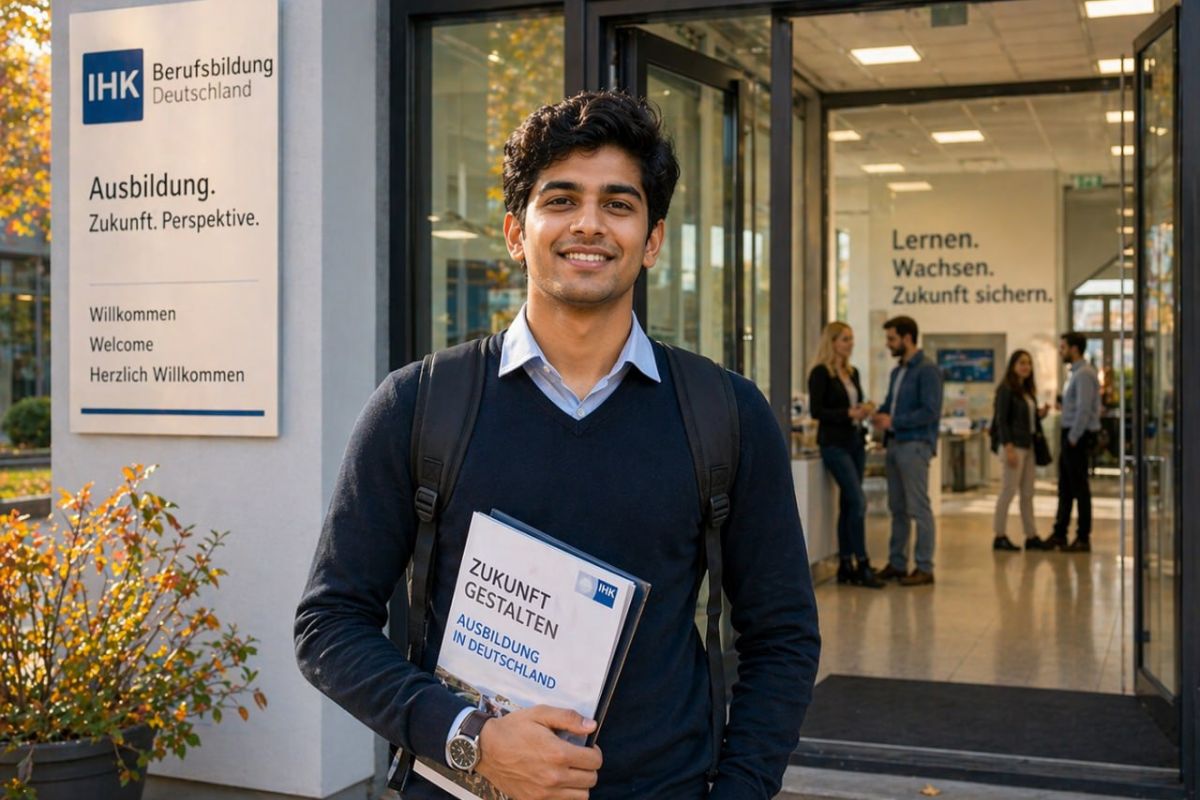
Train on a Salary, Not a Loan
- Earn While You LearnA monthly training salary from day one — no tuition fees and no education loan required to get started.
- Legal Work StatusTrainees hold full legal work and residence rights in Germany for the duration of their Ausbildung.
- Internationally Recognised QualificationA German vocational qualification is valued across Europe and carries genuine weight with employers worldwide.
- Strong Job DemandGermany faces a well-documented skilled-worker shortage across healthcare, IT, engineering and hospitality.
Choose a Trade That Fits You
Eligibility, salary and language requirements vary by field — we help you match your background to the right occupation.
Healthcare & Nursing
Nursing, elderly care, medical assistance, healthcare administration. B2 German typically required.
IT & Technology
IT specialist, system integration, software-related roles. English-friendly workplaces are common.
Engineering & Technical
Mechatronics, automotive technician, electrician, industrial mechanic. Strong demand nationwide.
Hospitality & Tourism
Hotel management, chef, restaurant professional, tourism assistant. B1–B2 German expected.
Business & Administration
Office management, bank clerk, insurance specialist, industrial clerk. B2 German usually needed.
Logistics & Warehousing
Warehouse logistics, supply chain, freight forwarding agent. B1 German for most roles.
Germany's Practical Career Pathway
German Language → Ausbildung → German Qualification → Skilled Employment → Long-Term Career
Prepare
Education check and German language training (A1–B1/B2 depending on field).
Ausbildung
Work, vocational school and earn — typically 2–3.5 years, on a training salary.
Qualify
Sit the German vocational qualification exam via your chamber (IHK/HWK).
Work
Move into qualified, skilled employment in your trade.
Progress
Build work experience, pension contributions and stronger German over time.
Options
Career growth, PR eligibility, further study, or advanced qualifications (Meister/Technician).
What It Takes to Settle Long-Term
PR is not automatic. Ausbildung leads to skilled employment on a relevant residence permit, and settlement becomes possible once you meet Germany's standard requirements.
- 24 months of statutory pension contributionsAccrued through your skilled employment period after Ausbildung.
- B1 German and integration knowledgeLanguage progression and basic civic knowledge are standard settlement requirements.
- Sufficient living space and self-supportAlong with an appropriate residence and employment status at the time of application.
A typical 3-year pathway
2027: Start Ausbildung · 2027–2030: Training, work & school · 2030: Qualification and skilled employment · 2030–2032+: Skilled work, contributions and requirements building toward eligibility.
Timelines are not a guarantee
Settlement eligibility depends on your individual occupation, permit type and personal circumstances — confirm your specific pathway with us before making plans around a fixed date.
Do You Qualify?
| Requirement | What's Typically Needed |
|---|---|
| Education | Minimum 10th pass for most trades; 12th pass preferred for IT, healthcare and business |
| German Language | B1 for most technical and logistics trades; B2 mandatory for healthcare, nursing and customer-facing roles |
| Age | Minimum 18 years; 18–30 preferred, no fixed upper limit, assessed case by case |
| Other | Genuine interest in the chosen profession, medical fitness, and funds for initial relocation expenses |
Ausbildung FAQs
Is Ausbildung a degree?
No — it's a vocational qualification, not a university degree. It's a practical, workplace-based training route into a skilled trade, distinct from Bachelor's/Master's study.
Do I need to know German before I apply?
You'll need to reach the required level (usually B1 or B2 depending on your trade) before your visa application — we guide you through language preparation as part of the process.
How much will I earn during training?
Training salaries vary by trade, region and employer, typically in the range shown above. Always confirm the exact figure in your specific training contract.
Can I stay in Germany after Ausbildung?
Yes, in principle — most trainees move into skilled employment on a related residence permit. Long-term settlement follows Germany's standard requirements and is not automatic.
Start Your Ausbildung Journey
Tell us your education background and interests — we'll match you to eligible trades and guide you through language prep, applications and your German visa.